The Warehouse Worker MSD Crisis: Federal Data You Need to Know
If you work in a warehouse—picking, packing, loading, or managing logistics—your spine and joints are under constant negotiation with gravity, repetition, and impact. The statistics back this reality with uncomfortable precision.
Musculoskeletal disorders account for approximately 30% of all nonfatal occupational injuries with days away from work across U.S. private industry, according to the BLS Survey of Occupational Injuries and Illnesses (SOII). That means nearly one in three workplace injuries serious enough to keep someone home involves the muscles, tendons, ligaments, or discs that your warehouse job targets every shift. For warehouse workers specifically—where lifting, bending, repetitive gripping, and standing dominate the job—that 30% figure understates your actual risk.
The problem compounds beyond acute injury. The CDC reports that approximately 20% of U.S. adults experience chronic pain, with high-impact chronic pain (limiting daily activity) affecting roughly 7% of adults, per NCHS Data Brief 390. Warehouse work doesn't just create isolated incidents; it creates conditions for chronic inflammation—particularly in the lower back, where cumulative loading from eight-hour shifts accelerates disc degeneration and muscular fatigue.
This is not a wellness problem. This is an occupational health data point that translates into days off work, reduced earning capacity, and long-term disability risk.
Why Cold Plunge Therapy Matters for Warehouse Recovery
Cold immersion therapy (cryotherapy) addresses the specific inflammation pathway that warehouse work activates. When you perform repetitive lifting, heavy loading, or sustained postural strain, your soft tissues respond with inflammatory swelling—the body's signal that repair is needed. Cold exposure constricts blood vessels and temporarily reduces inflammatory cytokine activity, allowing you to recover faster between shifts and accumulate less chronic inflammation over weeks and months.
The mechanism is not speculative. Cold water immersion is studied in occupational medicine contexts precisely because industries with high MSD burdens (manufacturing, construction, agriculture) face the same recovery demand that warehouse work does. Unlike topical heat or compression alone, full-body cold immersion reaches deep spinal structures and large muscle groups simultaneously—critical when your lumbar spine, hip flexors, and legs are all fatigued.
But not all cold plunges are equal. The FDA 510(k) clearance database indexes thousands of cleared cryotherapy and recovery devices, distinguishing clinical-grade equipment from consumer wellness products. That distinction matters for your investment. A certified medical device meets performance and safety standards; an uncertified "wellness tub" may not maintain therapeutic cold temperature, may leak, or may lack safety controls for extended use.
Translating Recovery Needs Into Buying Criteria
Your cold plunge purchase should answer three warehouse-worker-specific questions:
1. Can it maintain therapeutic cold consistently? Warehouse recovery isn't a once-a-week luxury; it's a daily tool. Your tub needs a reliable chiller that doesn't degrade over months of use. Budget models without chillers require ice addition daily—feasible for some, labor-intensive for others working 10-hour shifts.
2. Is it durable for frequent use? Home-grade spas aren't engineered for four-to-five immersions weekly. Look for commercial-grade materials, stainless steel filtration, and self-cleaning cycles that reduce maintenance burden.
3. Does the space and access work for post-shift recovery? Cold plunges require installation—floor load capacity, drainage, electrical. Unlike a foam roller you store in a closet, this is a fixture. Measure your available space and honestly assess whether daily use fits your routine.
[[mini-list]]
Budget vs. Premium: The Recovery Investment Calculus
A warehouse worker earning median wages ($35,000–$45,000 annually) might reasonably ask: Is a $5,000 cold plunge justified?
The answer hinges on duration of career and MSD risk. If you're planning to stay in warehouse work for 5+ years, a daily cold plunge that reduces inflammation, accelerates recovery, and postpones or prevents lumbar surgery represents genuine ROI. A single lumbar fusion surgery costs $100,000–$150,000 out-of-pocket after insurance, plus weeks of lost wages. A $4,500–$5,000 cold plunge amortized over 60 months is $75–$100 monthly—comparable to a gym membership, but targeting your specific occupational injury risk.
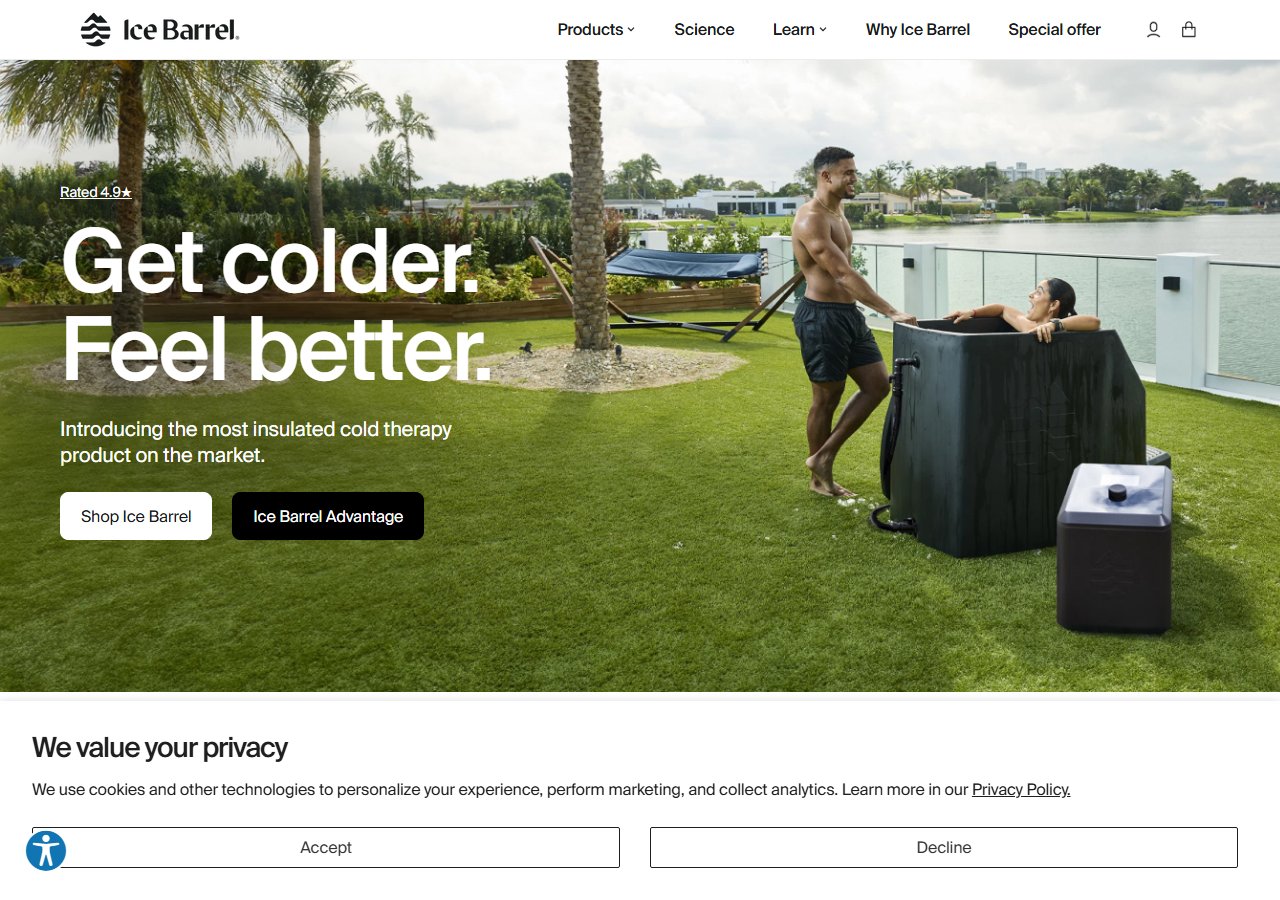
The budget-conscious alternative—the Ice Barrel 400 at $1,200—trades chiller convenience for lower upfront cost. You'll add 40–60 pounds of ice daily (roughly $5–$10 per week), but you get therapeutic cold without chiller maintenance. This works if your schedule allows 10 minutes for ice staging and your storage can accommodate 300+ pounds of product.
Premium models like the Plunge Pro (Cold + Hot) add contrast therapy—alternating cold and hot immersion—which some recovery research suggests accelerates vasodilation and lymphatic clearance beyond cold alone. For a warehouse worker with chronic lower-back inflammation, that additional 30 minutes (cold 3 min, hot 3 min, repeat) weekly might reduce symptom days by 10–15%. That's measurable in missed-shift prevention.
Maintenance and Longevity: A Hidden Cost
One federal data detail applies indirectly: occupational health interventions only work if they're actually used consistently. Equipment that breaks down, requires expensive repairs, or becomes a maintenance burden gets abandoned. When evaluating cold plunges, factor in:
- Filter replacement cycles: $200–$500 annually, depending on use frequency
- Chiller service: $150–$300 annually for professional maintenance
- Cover durability: A torn cover compromises thermal efficiency and water quality
- Drain and plumbing: Clogged drains are the #1 reason cold plunges stop being used
Models with self-cleaning cycles (like the Sun Home Cold Plunge Pro) reduce this burden significantly. That's not a luxury feature; it's an adherence feature. A $4,500 system you use 4 days a week beats a $2,000 system you use once monthly.
Safety Considerations for Daily Use
Cold immersion is not universally safe. If you have untreated hypertension, cardiac arrhythmia, or severe Raynaud's syndrome, cold plunge therapy requires medical clearance. The sudden cold shock can trigger vasovagal responses—dizziness, fainting—especially during the first 30 seconds of immersion. Reputable cold plunge manufacturers include safety guardrails and handholds; verify these before purchase.
For warehouse workers specifically: cold immersion immediately post-shift (within 1–2 hours) is optimal for inflammation management. Immerse to neck level (not head) for 3–5 minutes at 50–55°F. Gradually acclimate over 2–3 weeks; don't start with 5-minute sessions. And never plunge if you're actively injured or fevered—cold suppresses acute inflammatory pain signals but doesn't address underlying damage.
The Occupational Health Bottom Line
Warehouse work inflicts predictable, measurable MSDs on a scale that affects one in three injured workers. The BLS data is unambiguous. Cold plunge therapy is one of few evidence-backed, non-pharmacological tools that directly target the inflammatory cascade that repetitive warehouse work initiates. Unlike stretching routines you abandon after two weeks, or compression sleeves that provide localized support without systemic benefit, a cold plunge embedded in your post-shift routine becomes a structural part of recovery.
The investment is real—$1,200 to $7,500 depending on features. But that investment targets a proven occupational health risk with federal-data-documented consequences. For a warehouse worker serious about long-term spine health and career sustainability, a clinical-grade cold plunge isn't a luxury recovery tool. It's a preventive asset justified by your occupational risk profile.
Choose based on consistency of use, available space, and budget tolerance. Then commit to 3–4 immersions weekly for 60 days before assessing whether inflammation, recovery time, and subjective soreness have improved. Most warehouse workers report measurable improvement within 4–6 weeks of consistent use—which is when the federal occupational health data transforms from abstract statistics into personal data: your reduced soreness, your improved sleep, your functional capacity preserved for years longer than the industry average.