The Physical Toll of Healthcare Work: Beyond Burnout
When nurses talk about burnout, they typically describe emotional exhaustion. But the data tells a more complex story. Healthcare workers—particularly nurses in acute care, surgical technicians, and emergency responders—accumulate musculoskeletal strain at rates comparable to construction workers. The difference is visibility: we talk about construction injuries; we rarely frame nursing injuries as occupational health crises.
The NIOSH Total Worker Health Program explicitly documents that workers in physically demanding occupations face cumulative biomechanical loading that requires deliberate recovery interventions. This isn't motivational wellness speak. It's federal occupational health policy stating that recovery infrastructure—deliberate, structured, regular—is part of occupational health, not luxury.
For nurses, the biomechanical loading is constant: patient lifting, sustained standing, repetitive reaching, prolonged static postures during procedures. Over 12-hour shifts, 3-4 days per week, this compounds. The body doesn't distinguish between construction work and healthcare work when it comes to cumulative strain.
The Disability Data: Why Musculoskeletal Disorders Matter
Here's where federal data becomes actionable for your recovery decisions. The Social Security Administration's Disability Insurance reports document that musculoskeletal disorders are consistently among the top categories of new disability claims. Construction and warehouse workers are disproportionately represented—but they're not alone. Healthcare workers feature prominently in occupational injury data, even if the narrative around healthcare disability is less visible than construction.
This matters for your buying decision because it reframes cold plunge investment not as wellness discretionary spending, but as recovery infrastructure that directly addresses documented occupational health risks. You're not buying a luxury spa treatment. You're investing in a tool that occupational health researchers recognize as part of preventing cumulative strain injury.
Cold Plunges and Cryotherapy: Understanding FDA Classifications
Not all cold plunges are equal from a clinical perspective. The FDA's 510(k) Clearance Database indexes thousands of cleared cryotherapy and recovery devices, distinguishing clinical-grade equipment from consumer wellness products. This distinction matters when you're spending thousands of dollars.
Class II medical device clearance signals that a cryotherapy device has been evaluated for safety and performance claims. It doesn't mean the FDA endorses cold plunging as treatment for specific conditions (that would require clinical trial data), but it means the device itself has been scrutinized for what it claims to deliver: consistent water temperature, safe immersion environments, and reliable operation.
When evaluating cold plunges, check whether the manufacturer references FDA clearance in their marketing. If they do, look up the specific 510(k) number in the FDA database. This gives you a concrete data point: Does this device meet the agency's safety and performance standards for cryotherapy equipment?
For healthcare workers specifically, this distinction is important. You understand medical device classification. You know the difference between FDA-cleared and marketing claims. Apply that same rigor to your own recovery equipment.
Why Cold Plunges Appeal to Healthcare Workers
Cold water immersion offers several advantages for occupational recovery that appeal specifically to healthcare workers' constraints:
Non-pharmacologic: Cold exposure triggers physiological responses—reduced inflammation markers, parasympathetic activation—without medications. For healthcare workers managing pain or stress, this offers a tool you control.
Time-efficient: A 3-5 minute cold plunge fits into existing routines better than hour-long recovery protocols. After a shift, this matters.
Measurable: You can track water temperature, immersion time, frequency. This appeals to the data-driven thinking of healthcare professionals. You're monitoring a variable, not hoping a supplement "works."
Non-addictive: Unlike some recovery tools, regular cold exposure doesn't create tolerance or dependency requiring escalation.
The mechanism isn't mysterious. Cold water immersion activates the parasympathetic nervous system, reduces core body temperature temporarily, and triggers vasomotor responses that can reduce inflammatory markers in the 24-48 hours post-immersion. For healthcare workers managing chronic occupational stress (which itself amplifies inflammatory responses), this offers a physiological off-ramp.
Evaluating Cold Plunge Options: What the Data Says
You're evaluating cold plunges across three primary variables: temperature control reliability, water management systems, and price-to-durability ratio.
Temperature control is non-negotiable. Effective cold exposure protocols depend on consistent water temperature (typically 50-59°F). Devices without active chillers—like outdoor barrels—vary with ambient temperature and season. This creates unpredictable exposure conditions, which is problematic if you're using cold plunging as a systematic recovery tool.
Water management affects long-term usability. Cold plunges either require frequent water changes (high maintenance) or have integrated filtration/ozonation systems (higher upfront cost, lower ongoing burden). For healthcare workers already managing time constraints, this distinction determines whether the device becomes a recovery staple or a expensive lawn decoration.
Price-to-durability: Cold plunges range from $1,200 to $7,500+. The variation reflects material quality, chiller efficiency, water management sophistication, and warranty. A $1,200 barrel might serve well if you're testing cold immersion; a $4,500+ system should deliver 5-10 years of reliable operation.
[[mini-list]]
Clinical Grounding: What the Research Actually Shows
It's important to be precise about what cold plunging does and doesn't do based on available evidence:
Documented effects: Cold water immersion reliably triggers acute parasympathetic activation, reduces skin temperature and local inflammation markers, and improves reported recovery sensation in athletes. These are physiological facts.
Not documented: Cold plunging does not cure burnout, replace adequate sleep, or substitute for systemic workplace changes. It's a recovery tool, not a solution to occupational health problems that often require policy-level intervention.
For healthcare workers facing structural staffing shortages, this distinction matters. A cold plunge is a recovery infrastructure you control individually. It's not a replacement for adequate staffing, appropriate shift lengths, or systemic support. Use it as part of an occupational health strategy—alongside sleep prioritization, movement practice, and stress management—not as a substitute for workplace changes that need to happen at an institutional level.
Making Your Decision: Key Buying Questions
How much space do you have? Cold plunges range from compact 2-person models (
4×4 feet) to larger systems (8×5 feet). Measure your intended location.What's your temperature consistency requirement? If you're in a climate where outdoor temperature varies 20+ degrees seasonally, active chiller systems (higher cost) ensure consistent protocol adherence. Passive systems (barrels) work if you're flexible with temperature.
How much maintenance tolerance do you have? High-maintenance systems (frequent water changes) might work for 2-3 dedicated users; ozonated or salt-based filtration systems handle higher use frequencies and multiple users.
Is self-cleaning important? For healthcare workers managing time scarcity, automated cleaning systems (like UV or ozonation cycles) reduce friction to regular use.
Warranty and support: Does the manufacturer offer parts availability? Service support in your region? This matters for devices you'll own for years.
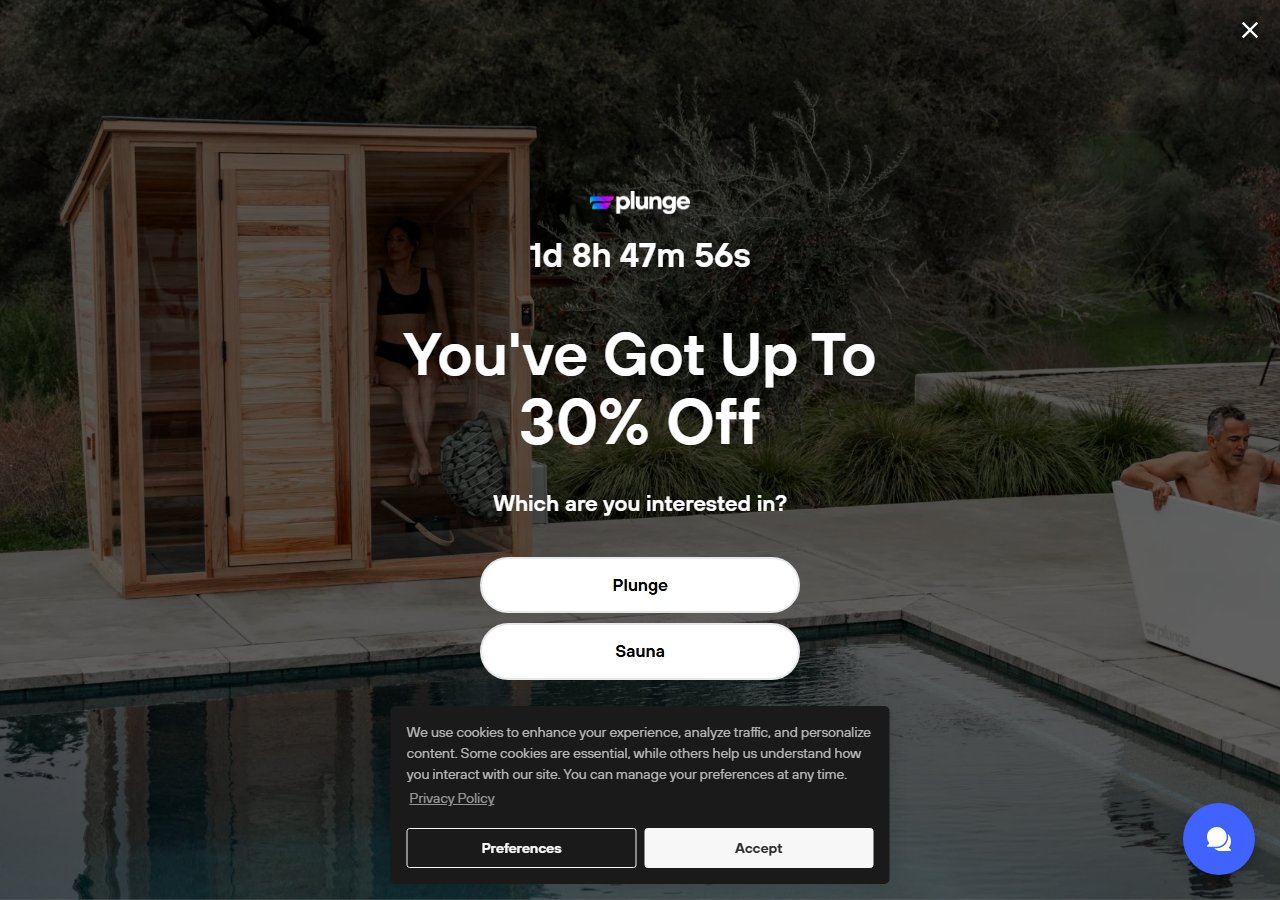
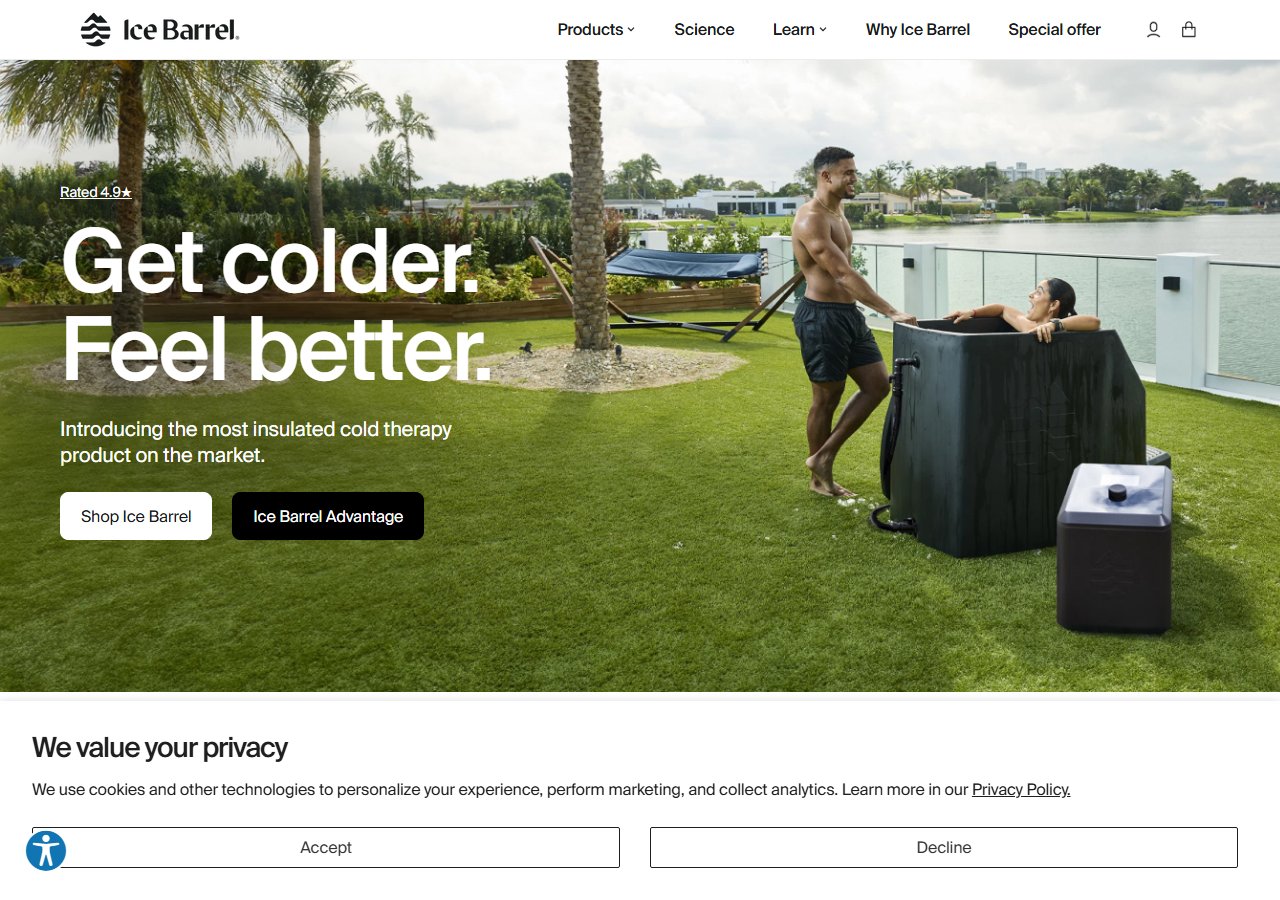
The Sun Home Cold Plunge Pro, for instance, emphasizes self-cleaning integration—directly addressing the time-constraint factor for healthcare workers. The Plunge Pro's dual hot/cold capability appeals to workers who want recovery flexibility (cold for acute inflammation, heat for muscle tension). The Ice Barrel 400 suits healthcare workers willing to trade temperature consistency for lower cost during an evaluation phase. The Plunge Pure balances performance, reliability, and reasonable cost for long-term use.
Why Healthcare Workers Specifically Benefit
Healthcare workers already understand medical device classification, FDA processes, and evidence-based practice. You're not making an impulse wellness purchase; you're evaluating occupational health infrastructure.
The NIOSH Total Worker Health framework specifically recognizes that workers in physically demanding occupations accumulate cumulative biomechanical loading requiring deliberate recovery interventions. Healthcare workers meet this definition. You're not indulging in luxury; you're implementing occupational health strategy based on federal research.
Further, healthcare workers are particularly vulnerable to chronic stress amplification of inflammatory responses. The occupational stress endemic to nursing—understaffing, high acuity, emotional labor—creates a biochemical environment where inflammation markers remain elevated. Cold water immersion interrupts this pattern physiologically, offering a non-pharmacologic tool you control.
The Bottom Line
Cold plunges represent a serious occupational health investment if selected thoughtfully. They're supported by:
- Federal occupational health research (NIOSH) framing recovery infrastructure as occupational health
- Epidemiological data (SSA) documenting musculoskeletal disorder prevalence in physically demanding work
- FDA device classification standards distinguishing clinical-grade cryotherapy equipment
For healthcare workers managing cumulative occupational strain and chronic stress, cold plunges offer a measurable, non-pharmacologic recovery tool. The key is matching device capability to your specific constraints—space, temperature consistency needs, maintenance tolerance, and budget.
Evaluate the device (not marketing claims), understand its FDA classification status, and integrate it into a broader occupational health practice that includes sleep, movement, and stress management. When selected this way, a cold plunge becomes recovery infrastructure, not luxury.