The Federal Data Manufacturing Workers Can't Ignore
If you spend eight or more hours a day on a factory floor—lifting, torquing, pushing, and carrying—the federal government has already documented what that work is doing to your spine. According to the BLS Survey of Occupational Injuries and Illnesses (SOII), the back is the single most injured body part across all U.S. occupations that result in days away from work. That is not a wellness-industry claim. That is the Bureau of Labor Statistics, the same agency that tracks unemployment, telling you that your trade concentrates mechanical load precisely where the human body is most vulnerable to chronic injury.
The financial stakes match the physical ones. AHRQ's Healthcare Cost and Utilization Project (HCUP) data documents that a single workers' compensation lumbar strain claim averages $30,000 to $60,000 in direct costs, depending on jurisdiction and severity. Multiply that across a mid-size manufacturing operation with dozens of material handlers, and the MSD burden stops being a human-resources line item and becomes an existential threat to profitability. Meanwhile, AHRQ's Medical Expenditure Panel Survey (MEPS) confirms that adults living with chronic back conditions carry substantially higher annual personal healthcare costs than those without—meaning the financial damage compounds beyond the employer's ledger into workers' own household budgets.
This article is built around one question: given what federal data tells us about manufacturing MSDs, how should a worker—or a facility manager designing a wellness room—think about massage chairs as one tool among many in a serious injury-prevention strategy?
Why Manufacturing Workers Develop MSDs: The Biomechanics
Most occupational back injuries are not accidents. They are the predictable outcome of physics applied repeatedly to biological tissue. The NIOSH Lifting Equation is the federal government's biomechanical model for manual material handling, and its core finding is sobering: the tasks that make up a typical manufacturing or warehousing shift—lifting pallets, rotating torsos under load, handling parts at awkward heights—routinely exceed the Recommended Weight Limit that protects lumbar spinal structures from compressive and shear forces.
The NIOSH model calculates something called the Lifting Index. A Lifting Index above 1.0 means the task poses elevated MSD risk. Many standard warehouse and manufacturing tasks produce Lifting Index values of 2.0, 3.0, or higher. Cumulative exposure to those forces across a career compresses intervertebral discs, fatigues paraspinal musculature, and progressively erodes the protective capacity of the lumbar spine. This is why BLS SOII data shows warehousing and storage (NAICS 493) among the highest nonfatal injury rates in all of U.S. private industry.
The mechanism is not just compression. Three distinct biomechanical stressors converge in manufacturing work:
1. Axial compression: Lifting and carrying transmit compressive force through vertebral endplates. The NIOSH model sets 3,400 Newtons as the action limit for spinal compression; many common warehouse lifts exceed 6,000 Newtons at the L5/S1 disc.
2. Asymmetric loading and shear: Twisting under load—rotating to place a box on a conveyor while holding it away from the body—generates anterior shear forces that intervertebral discs are far less equipped to resist than pure compression. This is the mechanical origin of the disc herniations that appear disproportionately in manufacturing injury claims.
3. Sustained muscle tension and ischemia: Workers who maintain static postures for extended periods—standing at a line, holding tooling overhead—experience progressive muscle ischemia (reduced blood flow to contracting tissue). Ischemic muscle tissue accumulates metabolic waste products, generating the deep, diffuse pain that manufacturing workers describe as "my back locks up at the end of a shift."
It is that third mechanism—sustained tension and ischemia—where massage chairs have their most evidence-supported role. Mechanical massage increases local circulation, accelerates metabolic waste clearance from fatigued muscle, and reduces the resting tension in paraspinal musculature. It does not reverse disc pathology. It does not substitute for technique training or ergonomic equipment. But for the ischemic, tension-driven component of end-of-shift back pain, it addresses the right tissue at the right level.
CDC arthritis and musculoskeletal data reinforces the picture: approximately 1 in 4 U.S. adults reports doctor-diagnosed arthritis, and that prevalence is disproportionately concentrated in occupations with high physical demand. Manufacturing workers are not just at elevated risk of acute injury—they face accelerated musculoskeletal aging that makes ongoing recovery support a career-long need, not a short-term fix.
The Cost of Ignoring the Problem
OSHA's Severe Injury Reports database documents thousands of work-related amputations, hospitalizations, and other severe injuries annually—concentrated in manufacturing, construction, and warehousing. MSDs rarely appear in those dramatic statistics, but they constitute a slower, larger catastrophe. Chronic musculoskeletal pain drives workers toward pharmaceutical management, and CMS Drug Spending Dashboard data shows opioid and non-opioid pain medications consistently among the most expensive Medicare drug categories—a downstream reflection of how undertreated occupational pain becomes a national pharmacological crisis.
BLS Employer Costs for Employee Compensation (ECEC) data shows that warehousing and manufacturing carry some of the highest workers' compensation insurance premiums in U.S. private industry. Every prevented MSD—through ergonomic training, workstation redesign, or accelerated recovery via wellness-room equipment—translates directly into premium reduction. This is why the business case for factory massage chairs is not wellness theater. It is actuarial.
Try These Interventions First
The cheapest intervention is the one that requires no purchase at all. Before a manufacturing facility spends five figures on massage chairs—and before an individual worker spends two—the federal evidence base points clearly to several free or low-cost interventions that address the root causes of MSD accumulation. Equipment helps manage symptoms. These interventions help prevent the injuries in the first place.
Lifting mechanics are the foundation. OSHA's Materials Handling ergonomics guidance is explicit: lift with the legs, keep loads close to the body, and avoid twisting under load. Most occupational back injuries are mechanically preventable. A facility that invests in massage chairs without investing in lifting technique training is treating the symptom while ignoring the pathogen. Technique training costs almost nothing and, per NIOSH's Lifting Equation model, can cut the Lifting Index of a given task dramatically without any equipment change.
Micro-breaks are evidence-based, not soft. NIOSH Office Ergonomics research documents that 30-second micro-breaks every 30 minutes reduce musculoskeletal symptom accumulation in workers performing repetitive tasks. For manufacturing workers, this means structured rest from sustained postures—standing off the line, performing a few shoulder rolls, resetting neutral spine posture. The mechanism is interruption of the ischemic cycle before metabolic waste accumulates to symptomatic levels.
Thoracic mobility work costs nothing. Manufacturing tasks compress the thoracic spine into flexion—forward bending, reaching across workbenches, operating machinery with outstretched arms. Two minutes of thoracic extension over a foam roller daily can meaningfully counteract that postural pattern. CDC physical activity guidance for adults recommends muscle-strengthening activity on two or more days per week; thoracic mobility work qualifies and specifically targets the postures manufacturing creates.
Workstation setup matters even on a factory floor. OSHA's Computer Workstation eTool, while developed for office environments, documents ergonomic principles—elbow angle, monitor height, reach distance—that translate directly to manufacturing assembly workstations. Many chronic shoulder and neck complaints in manufacturing workers originate from workstation geometry, not from intrinsic tissue pathology. Adjusting bench height or tool placement often resolves complaints that workers assume require treatment.
For workers who have applied the above interventions consistently—who lift correctly, take structured breaks, maintain thoracic mobility, and still end every shift with paraspinal muscles that feel like wound cable—the evidence supports adjunct recovery tools. Massage chairs belong in that category: adjuncts, not replacements. The clinical research on mechanical massage for occupational low-back pain is methodologically mixed, but the mechanistic rationale (improved circulation, reduced resting muscle tension, parasympathetic nervous system activation that downregulates pain signaling) is coherent and the risk profile is low when used appropriately.
When to See a Clinician
Massage chairs are appropriate for non-radicular, muscle-origin back and neck pain in workers without red-flag symptoms. The NIH National Institute of Neurological Disorders and Stroke is explicit that self-care, including massage, is appropriate for uncomplicated musculoskeletal pain—and equally explicit that certain symptoms require immediate clinical evaluation, not self-treatment.
Manufacturing workers should be particularly alert because the physical loading they experience creates conditions that can produce serious structural injury indistinguishable, at onset, from ordinary muscle soreness. A worker who shrugs off radiating leg pain as "sciatica from the job" and uses a massage chair instead of seeing a physician may be delaying treatment for a disc herniation with neural compromise, a condition where delayed care can result in permanent functional deficits.
See a clinician before using a massage chair if any of the following apply:
- Pain radiates into one or both legs, especially below the knee, or into the arms below the elbow
- Numbness, tingling, or weakness accompanies the pain in any extremity
- Pain followed a specific traumatic event (fall, crush, significant impact)
- Pain is accompanied by fever, unexplained weight loss, or night sweats (these suggest systemic rather than mechanical origin)
- Bladder or bowel function has changed since pain onset (medical emergency; seek immediate care)
These red flags apply regardless of how long you have worked physically demanding jobs. The NIH NINDS back pain guidance does not grade urgency by occupational history—a red flag is a red flag.
Where Massage Chairs Fit in a Manufacturing Wellness Room
With the mechanism understood, the interventions established, and the clinical boundaries defined, we can now evaluate massage chairs as the specific tools they are: recovery adjuncts that address the ischemic and tension-based component of manufacturing MSD burden, most useful in dedicated wellness rooms where workers can access them during breaks or after shifts.
The regulatory context matters here. FDA's 510(k) clearance process distinguishes therapeutic massage devices that meet Class II medical device standards from consumer wellness products. For a facility deploying massage chairs as part of a formal wellness program—especially one tied to workers' comp cost reduction—the distinction between FDA-cleared clinical-grade equipment and a consumer-grade chair matters both for liability and for clinical credibility with occupational health staff.
For facility managers evaluating options and for individual workers looking to invest in home recovery equipment, three chairs rise to the top of the credible field when evaluated against the specific demands of manufacturing work: high-weight-capacity frames capable of supporting workers across a wide size range, SL-track roller coverage that addresses the lumbar-through-gluteal region where manufacturing MSDs concentrate, and zero-gravity positioning that decompresses spinal structures that have spent eight hours under axial load.
The Bodyfriend Phantom 2 is the premium option for manufacturing wellness rooms where a long-term institutional investment is justified. Bodyfriend is a South Korean brand with deep roots in clinical massage technology; the Phantom 2 specifically reflects Korean occupational health market demands, where manufacturing MSD rates drove the development of genuinely therapeutic chair engineering. Its roller mechanism covers a full SL-track path—from the cervical spine, where manufacturing workers accumulate tension from overhead and reaching tasks, through the lumbar and into the gluteal musculature that absorbs compressive load during lifting. At $4,990, this is a capital equipment purchase, not a consumer device, and it should be evaluated as such: amortized across a multi-year facility wellness program against workers' comp cost reduction targets.
For facilities building out a wellness room on a tighter budget, or for individual workers investing in home recovery, the RELX Massage Chair Full Body at $1,899.99 delivers full-body SL-track coverage with zero-gravity positioning at a price point accessible to individual purchasers. It lacks the clinical engineering depth of the Bodyfriend but addresses the same fundamental recovery needs—lumbar decompression, paraspinal tension reduction, lower-extremity compression for workers whose legs also accumulate fatigue from standing shifts.
For the most budget-conscious entry into genuine therapeutic function, the HealthRelife 4D Massage Chair at $1,699 offers a 55-inch SL-track zero-gravity recliner with 4D roller mechanics. The 4D designation means the rollers move in multiple planes—mimicking the multidirectional pressure of a human massage therapist's hands more closely than 2D or 3D systems. For manufacturing workers whose paraspinal pain has a strong myofascial component (tight bands of muscle tissue that respond to cross-fiber friction), 4D mechanics are meaningfully better than simpler roller systems.
Massage Chairs Built for Manufacturing Worker Recovery
These three chairs were selected specifically for the recovery demands of manufacturing and warehousing workers: SL-track lumbar coverage, zero-gravity spinal decompression, and frame engineering capable of handling the body sizes and daily-use frequency a factory wellness room requires.

Bodyfriend Phantom 2 Massage Chair
$4,990
See Price at Bodyfriend →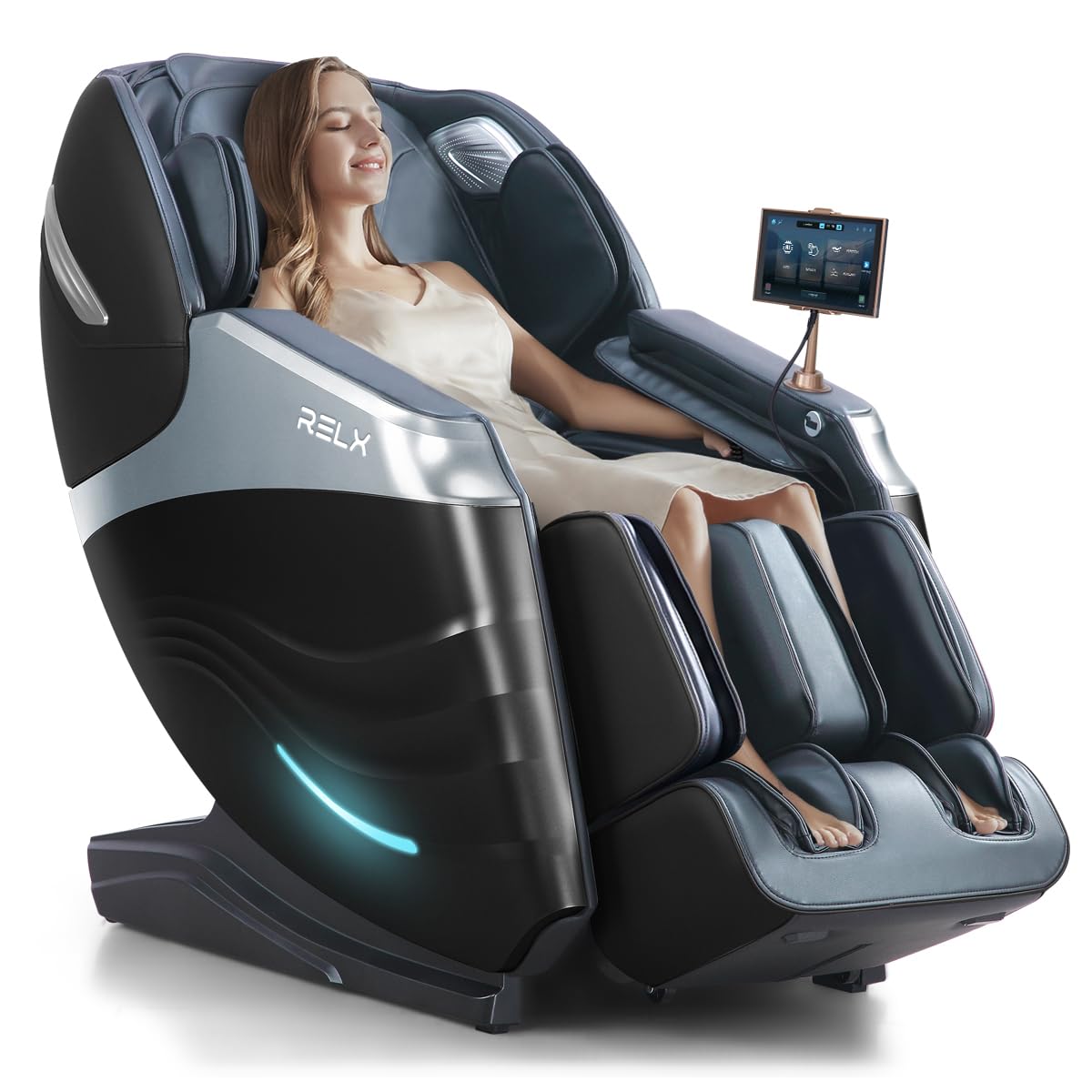
RELX Massage Chair Full Body, 20 Modes Zero Gravity SL-Track Shiatsu Massage ...
$1,899.99
Check Price on Amazon →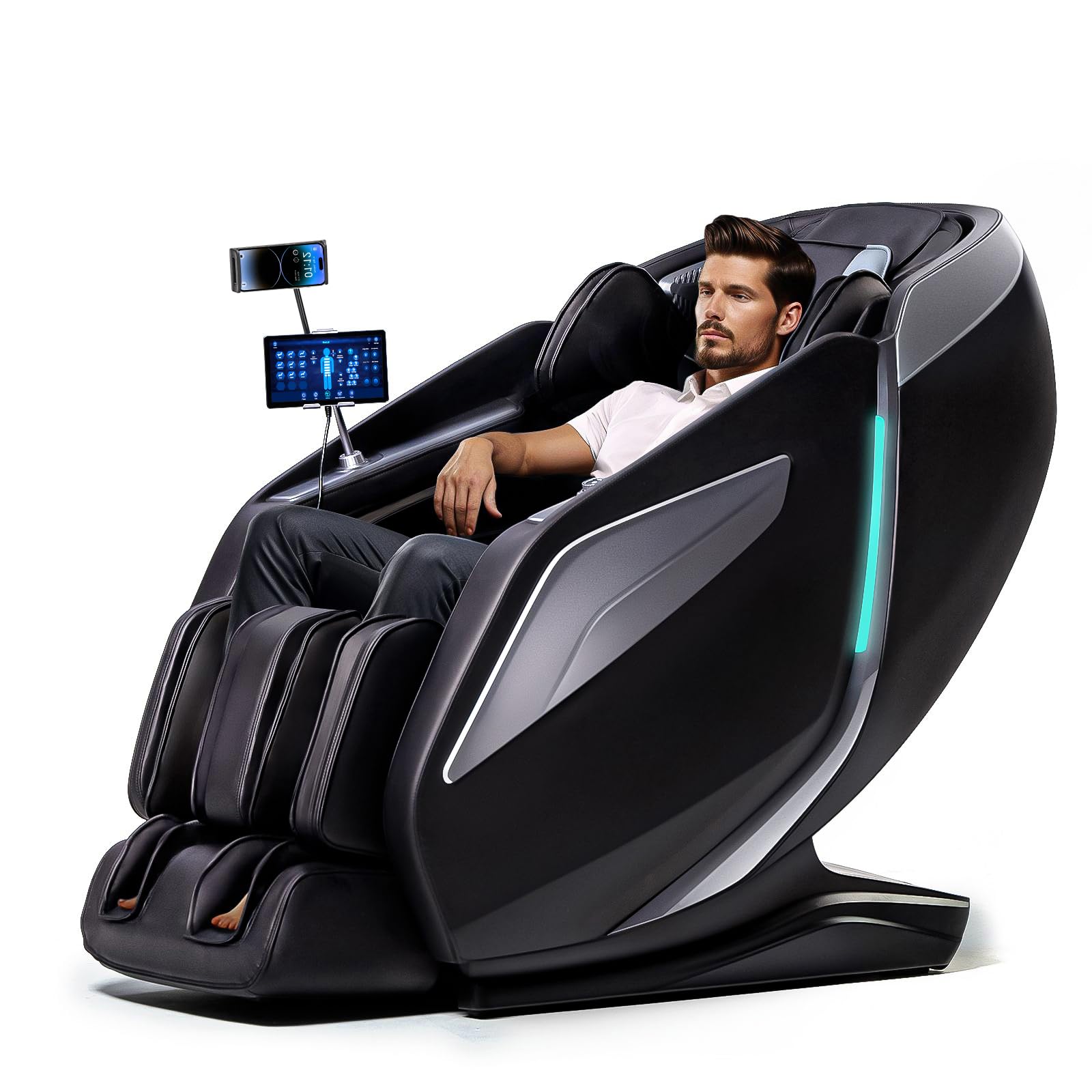
HealthRelife 4D Massage Chair Full Body Zero Gravity Recliner - 55“ SL-Track,...
$1,699.00
Check Price on Amazon →Putting It Together: The Data-to-Recovery Hierarchy
Federal data draws a clear line from manufacturing work to MSD burden to healthcare cost to downstream pharmaceutical spending. The BLS SOII documents the injury rates. AHRQ HCUP documents the cost per claim. NIOSH's Lifting Equation documents the biomechanical mechanism. CMS drug spending data documents where undertreated occupational pain ends up pharmacologically.
The intervention hierarchy that the evidence supports is: first, technique training and ergonomic workstation design (free, preventive, highest leverage); second, structured movement and micro-breaks (free, evidence-based, addresses ischemic mechanism directly); third, clinical evaluation when red flags are present (non-negotiable); and fourth, recovery tools including massage chairs (adjunctive, appropriate for the tension and ischemia component of non-radicular MSD).
Facility managers who deploy massage chairs without the first two rungs of that ladder are investing in downstream symptom management while leaving the upstream injury source intact. Workers who use massage chairs in addition to correct technique, regular movement breaks, and appropriate clinical follow-up are using the full toolkit the evidence supports.
The manufacturing MSD crisis documented in federal data is real, expensive, and preventable to a degree that should embarrass an industry that has not fully committed to prevention. Massage chairs, properly positioned in that context, are one credible tool in a serious strategy—not a wellness amenity, and not a substitute for the harder work of fixing the jobs that create the injuries.